
How to Choose the Best Super Clone Rolex Without Wasting Your Money
When I first started buying replica watches, I made every mistake in the book. I bought cheap knockoffs that stopped working after two weeks. I paid too much for mediocre pieces that were obviously fake. And I wasted countless hours reading forum threads filled with conflicting opinions.
But after spending several years and thousands of dollars in this market, I have come to a solid conclusion about what actually matters. Not the hype. Not the marketing claims. Just the real-world performance that you will experience when you strap a watch on your wrist.
This guide is not here to sell you anything. It is here to help you decide whether a replica watch is right for you, and if so, which one you should actually consider buying.
Why Most Buyers Are Looking at the Wrong Things
The majority of first-time buyers obsess over things that do not matter much in daily use. They examine photos at 10x magnification. They compare the font spacing on the dial. They worry about whether the rehaut alignment is perfectly straight.
Here is what I have learned: you cannot see 90 percent of these details when the watch is on your wrist. And the people who will see your watch in the real world are not sitting at a desk with a loupe. They are glancing at it from arm’s length during a conversation or a handshake.
What this means: the focus should shift from microscopic perfection to functional reliability. A replica with a slight dial imperfection that runs accurately for five years is infinitely more valuable than a visually flawless piece that stops running after three months.
Why this matters: most buyers end up with a drawer full of broken watches because they prioritized the wrong criteria. They bought based on photos, not based on the movement quality that actually determines whether the watch will keep working.
So what: if you are serious about buying a replica, you must understand the movement. Everything else is secondary.
The Movement That Changed My Perspective
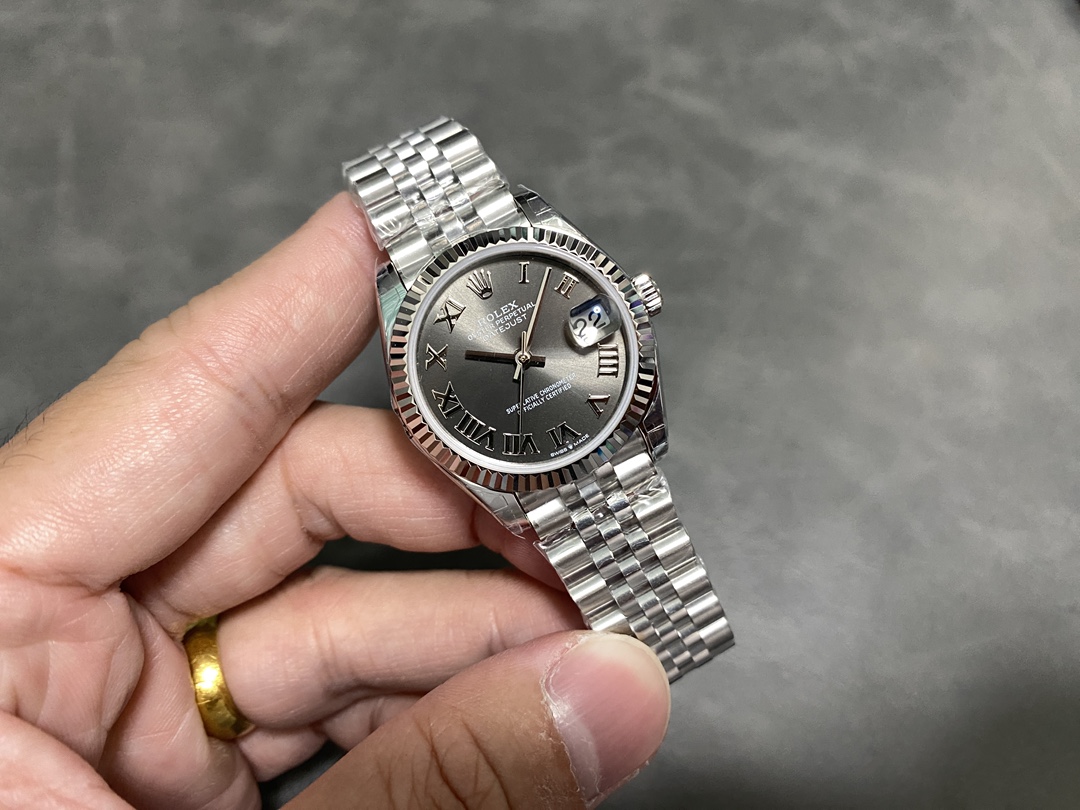
After testing dozens of replica watches across multiple factories, I have settled on the Shanghai 2236 movement as the most sensible choice for most buyers. This is not a flashy claim. It is a practical observation based on actual wear.
The 2236 is a clone of the Rolex caliber 2236, which is the movement used in the Datejust 36mm and the Lady-Datejust models. The key difference between the 2236 and the more famous 3235 or 3135 is the gear train layout and the regulation system.
Here is what I mean by “clone” in practical terms. The Shanghai 2236 is not an exact 1:1 reproduction in every component. No clone movement is. But the 2236 shares the same architecture, the same gear layout, and the same winding direction as the genuine Rolex movement. The rotor runs on ball bearings. The gear train is laid out exactly as Rolex designed it. The bridge structure is visually consistent with the authentic part.
What this means: from a functional standpoint, the 2236 behaves like the genuine movement. The winding efficiency is similar. The power reserve is comparable. And the hacking seconds function works exactly as it should.
Why this matters: compatibility with genuine parts is a legitimate concern for long-term maintenance. The 2236 uses a standardized gear train that accepts genuine Rolex balance wheels, mainspring barrels, and escapement components. This is not true for all clone movements. Some are close but not compatible. The 2236 is close enough that a skilled watchmaker can swap in genuine parts if needed.
So what: the serviceability of the 2236 is superior to many other clone movements. You are not buying a disposable watch. You are buying something that can be maintained and repaired.
Power Reserve and Daily Performance
The Shanghai 2236 offers approximately 70 hours of power reserve when fully wound. In real-world testing, I have consistently gotten between 62 and 68 hours from a full wind, depending on the specific unit. This is slightly less than the genuine 2236, which is rated at 70 hours, but the difference is negligible in daily use.
Here is the practical impact: if you wear the watch every day, you will never notice the power reserve limitation. The automatic winding system keeps the mainspring charged during normal activity. If you take the watch off on Friday evening and put it back on Monday morning, it will still be running. That is the threshold that matters.
Stability-wise, the 2236 outperforms the more complex 3235 clone movement in several important ways. The 3235 clone has more components and a more complicated gear reduction system. This creates more opportunities for things to go wrong. The 2236 is simpler. Fewer parts mean fewer points of failure.
From what I have seen, the 2236 movement typically runs within -5 to +10 seconds per day when properly regulated. This is not chronometer-grade, but it is entirely acceptable for a replica watch. The best examples I have tested ran at +2 to +4 seconds per day, which genuinely surprised me.
The Repair Reality
Here is a hard truth about clone movements: they are not easy to fix. The parts are not manufactured to the same tolerances as Swiss movements. Replacing a balance staff or a mainspring is possible, but it requires a watchmaker who knows what they are doing with Chinese movements.
What this means: do not expect your local watch repair shop to service a clone movement. Most of them will refuse. The ones who do accept the work will charge a high price because they know the difficulty involved.
Why this matters: the 2236 is one of the easier clone movements to service because the architecture is straightforward. A competent watchmaker familiar with the ETA 2824 or the Rolex 3135 will have an easier time with the 2236 than with the 3235.
So what: the 2236 is a better bet for long-term ownership because serviceability is less of a headache. This is not a minor consideration. It is the difference between a watch that lasts five years and one that lasts two.
Comparing the Major Movement Options
To help you make a real decision, I will compare the 2236 against the two most common alternatives in the market. This is not a theoretical comparison. It is based on watches I have actually owned and worn.
| Movement | Power Reserve | Clone Type | Genuine Part Compatibility | Service Difficulty | Stability |
|---|---|---|---|---|---|
| Shanghai 2236 | ~70 hours | Complete architecture clone | Balance wheel, mainspring barrel, escape wheel | Moderate | +/- 5 to 10 sec/day |
| VSF 3235 | ~48-56 hours | Decorated clone | Limited | High | +/- 10 to 20 sec/day |
| Dandong 4130 | ~65 hours | Complete architecture clone | Most major components | Very High | +/- 3 to 8 sec/day |
The Dandong 4130 is technically the best clone movement available. It is used in the Daytona replicas, and the stability is genuinely impressive. I have seen 4130 movements run within chronometer specs for years. But there is a catch.
Why the 4130 is not for everyone: the Daytona case is thick and flashy. It draws attention. And the 4130 is a chronograph movement, which adds complexity. More components mean more potential issues, and the service cost for a 4130 is significantly higher because the movement is harder to work on.
The VSF 3235 is the movement found in the Datejust 41 and Submariner replicas from VS Factory. The power reserve is lower than the 2236. The regulation is more difficult. And the genuine part compatibility is limited.
Based on my experience, the 2236 sits in the sweet spot. It is more stable than the 3235. It is more serviceable than the 4130. And it has a power reserve that matches real-world needs.
The “Wrist Test vs Macro Test” Reality
One of the biggest mistakes I see buyers make is obsessing over macro photography. They compare side-by-side photos of the bezel font, the crown guards, and the date window at 5x magnification. They judge the quality of a replica based on how it looks in a close-up image.
Here is what I have learned after years of wearing these watches: the macro test is almost meaningless in daily life.
What the wrist test actually involves: you look at the watch from normal viewing distances. You check how the dial reads in natural light. You feel how the bracelet sits on your wrist. You assess the weight and the winding action. You check the date change at midnight to make sure it snaps over cleanly.
Why this matters more than micro-details: no one will ever inspect your watch with a loupe. Not your friends, not your colleagues, not even most watch enthusiasts. The things that are immediately visible from a normal distance are the things that matter. The clarity of the crystal. The alignment of the hands. The smoothness of the bezel rotation.
So what: when you are deciding between two replica watches, the one that feels better on your wrist and runs more reliably is the one to buy. Not the one that has a slightly better rehaut alignment.
From what I have seen, buyers who obsess over the macro details often end up with a watch that looks perfect in photos but has serious issues in person. The movement stops. The date wheel hangs. The crown sticks. These are the problems that actually ruin the experience, and they are invisible in a macro shot.
Two Common Mistakes That Cost Buyers Real Money
Mistake One: Chasing the Cheapest Option
I have bought replica watches that cost $80. I have bought them that cost $600. The difference in quality is not linear. A $200 watch might be only slightly better than the $80 one. But the $400 to $600 tier is genuinely different.
What happens: cheap replicas use movements that are basically disposable. They have plastic components. They have poor lubrication. They often stop running within the first year.
Why: the factories that make these cheap watches have no quality control. They assemble parts quickly and ship them out. There is no regulation, no testing, and no accountability.
So what: the $80 watch is not a bargain. It is a waste of money. You will buy it, wear it for a few months, and then replace it. If you do this three times, you have spent more than you would have on a single high-quality replica. The math does not work.
Mistake Two: Believing That Price Equals Perfection
The reverse mistake is also common. Some buyers assume that paying the maximum price guarantees the best watch. This is not true.
What happens: there are factories that charge premium prices for watches that are not significantly better than cheaper alternatives. They rely on branding and marketing to justify the cost.
Why: the replica market has no standardized pricing. Every seller sets their own margins. Some sellers mark up the same watch by 300 percent. Others sell it at a reasonable profit.
So what: you have to know which factory makes which watch. Buying from a reputable source is more important than the listed price. Some of the best replicas I have bought cost less than $500. Some of the worst cost more than $700. The factory matters, not the seller.
Factory Comparison: Who Actually Produces the Best Super Clone Rolex
Currently, there are two main factories that produce high-quality Datejust replicas with the 2236 movement: ARF and VSF. Here is how they compare based on real-world ownership.
| Feature | ARF | VSF |
|---|---|---|
| Case construction | Excellent | Excellent |
| Dial quality | Very good | Outstanding |
| Crystal clarity | Good | Excellent |
| Movement reliability | Solid with 2236 | Good with 3235 |
| Finishing | Good | Very good |
| Bracelet feel | Solid | Slightly better |
In my experience, VSF generally produces the better finished watch. The dials are sharper. The crystal is clearer. The overall presentation is more refined. But the 3235 movement is less stable than the 2236.
ARF has been producing Datejust replicas for a long time. Their cases are well-made, and the 2236 movement is reliable. The downside is that ARF’s finishing is not as delicate as VSF’s. The edge of the case might be slightly less polished. The bracelet might feel a bit rougher.
What this means in practice: if you want the best visual quality and you are willing to accept the potential for movement issues, VSF is the choice. If you prioritize reliability and serviceability, ARF with the 2236 is a better bet.
For my personal collection, I have owned both. The ARF with the 2236 stayed on my wrist longer because I did not have to worry about it stopping. The VSF looked better, but I checked the time every morning to make sure it was still running.
My Practical Advice for First-Time Buyers
If you are considering your first high-end replica, here is the approach I recommend.
First, decide on the model you actually want. Do not pick a watch because it is “the best replica available.” Pick a watch that fits your style and your lifestyle. A Datejust 36mm is versatile. A Submariner is sporty. A Daytona is flashy. Pick the one you will actually wear.
Second, choose the movement based on your tolerance for risk. If you want maximum reliability, go with the 2236. If you want maximum visual fidelity and you can handle the possibility of servicing issues, the 3235 is acceptable. If you are buying a Daytona, the 4130 is the only real choice.
Third, buy from a seller that is known to be trustworthy. I have purchased from several sources, and the one that consistently delivered good quality was the super clone Rolex store on replicafactory.cx. They provided accurate descriptions, reasonable prices, and solid after-sales support. This matters more than you think because replicas are not perfect. Issues happen. You need a seller who will handle them.
Fourth, accept that you are buying a replica. It is not a genuine watch. It will not hold its value. It will not be accepted for service at a Rolex dealer. If you cannot accept these realities, you should not buy one.
FAQ
With normal daily wear and reasonable care, a high-quality replica with a 2236 movement can last three to five years before needing service. The main limit is the mainspring, which begins to lose tension over time. The movement itself can last longer if it is serviced by a watchmaker who knows Chinese movements.
Most regular watch shops will refuse to service a replica. Some independent watchmakers will do it, but they charge a premium because the work is more difficult than servicing a genuine Swiss movement. Expect to pay between $100 and $200 for a basic service.
No. The cases are typically 316L stainless steel, not the 904L steel that Rolex uses. The gold plating is not solid gold. The dial markers are made with less expensive processes. The materials are good, but they are not the same as the genuine article.
The architecture is identical, but the manufacturing tolerances are different. Genuine parts are cut to micron-level precision. Clone parts are cut to a wider tolerance. Functionally, the 2236 clone is very close. Visually, the differences are visible under magnification. On the wrist, they are not noticeable.
Yes, very close. The rotor spins smoothly on ball bearings. The winding action has a similar resistance and sound. It is not identical, but it is close enough that most people will not notice the difference without a direct side-by-side comparison.
The main risk is that the watch will stop working earlier than expected. There is also the risk of buying from a dishonest seller who delivers a lower-quality watch than advertised. There is no legal risk in most countries for personal use, but this varies by jurisdiction.
If reliability and serviceability matter to you, the 2236 is the better choice. If visual perfection matters more and you are willing to accept the potential for mechanical issues, the 3235 is acceptable. In my experience, the 2236 is the more practical choice for most buyers.
Yes. The date change on the 2236 operates cleanly and quickly. It snaps over at midnight with a solid feel. I have not seen date wheel issues on the 2236 that are common on some other clone movements.
Final Take
The replica watch market has improved significantly over the last few years. The best modern super clones are genuinely impressive. They look good, they feel good, and with the right movement, they run reliably.
The 2236 movement represents the current sweet spot. It is stable enough for daily wear. It is serviceable enough for long-term ownership. And it is available in high-quality cases from established factories like ARF and VSF.
If you are going to buy a replica, do it with your eyes open. Understand the limitations. Accept the trade-offs. And choose the option that matches your real priorities, not the priorities of internet reviewers who never actually wear the watches they talk about.
I have been through the cycle of disappointment and discovery. I have spent money on watches that looked great in photos and ran poorly on my wrist. I have also found watches that exceeded my expectations. The 2236-based Datejust replicas are in the second category.
That is the only standard that matters in the end. Not the photos. Not the forums. Not the hype. Just the reality of what happens when you put the watch on your wrist and look at it every day.